Customer Complaints Often Start With One Wrong Carton
Alyssa/ January 7, 2026 Return
In many food factories,
customer complaints don’t start with product quality.
They start with the wrong product in the box.
Right factory.
Right SKU.
Wrong carton.
And once a complaint reaches a key customer,
the problem is no longer small.
Why Large Customers Are Less Tolerant of Packaging Errors
For factories supplying:
- Supermarket chains
- Regional distributors
- Key accounts
packaging accuracy is part of the contract.
Customers expect:
- The right product
- In the right carton
- Every single time
One mistake is treated as a system failure,
not a one-time error.
Where Manual Cartoning Triggers Customer Complaints
Manual cartoning happens during secondary packaging,
after individual packs are already sealed.
At this stage,
mistakes are easy to make and hard to catch.
Errors slip through final checks
With manual cartoning:
- Similar SKUs sit close together
- Operators rely on labels and memory
- Visual inspection has limits
Once cartons are closed and shipped,
errors move downstream quickly.
Complaints surface far from the factory
Most issues are discovered by:
- Warehouse staff
- Store personnel
- End customers
By the time the factory hears about it,
the damage is already done.
How One Complaint Turns Into Real Loss
A single wrong carton rarely stays single.
Direct financial impact
Customers may demand:
- Full order replacement
- Credit notes or penalties
- Compensation for handling cost
These costs add up fast.
Long-term relationship damage
More serious is the hidden cost:
- Increased inspections
- Tighter delivery conditions
- Reduced trust
The factory is no longer seen as “reliable”.
Why More Checks Don’t Solve the Root Problem
Most factories respond by:
- Adding inspection steps
- Increasing QA workload
- Re-training packing staff
These actions reduce some errors,
but they also increase cost and pressure.
And still,
the risk remains.
Because the core issue is structural:
Manual cartoning relies on people to separate, remember, and execute correctly—every time.
That is fragile at scale.
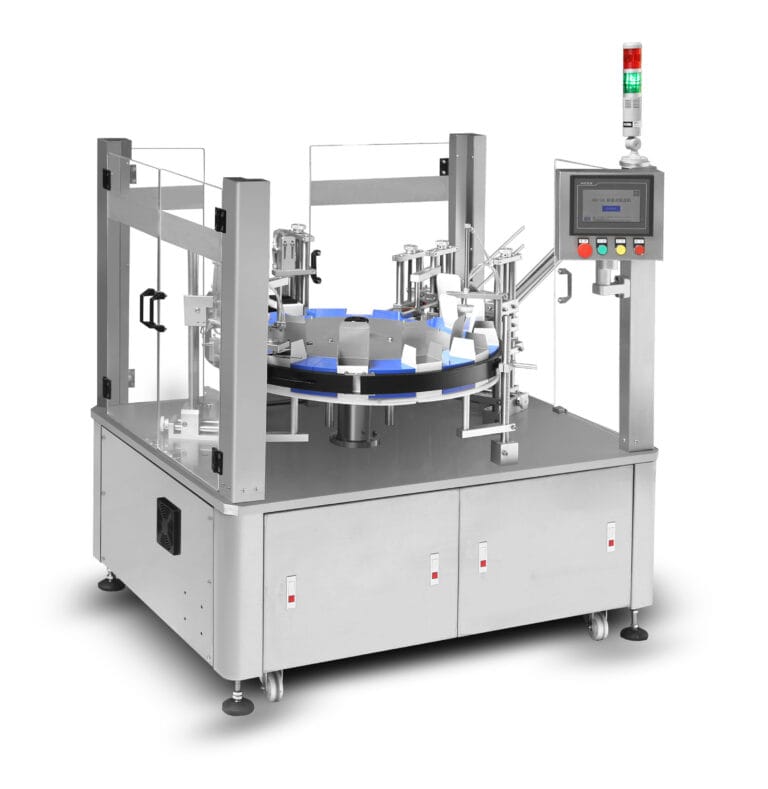
How a Cartoning Machine Reduces Complaint Risk at the Source
Here we are talking about secondary packaging—
cartoning after individual packs,
with no direct contact with food.
This is the best place to control accuracy.
SKU handling becomes more controlled
- Clear product flow
- Defined carton logic
- Less chance to mix similar items
Errors are prevented, not discovered later
- Fewer opportunities to put the wrong product in
- Less reliance on final inspection
- More predictable packaging output
Customer confidence improves
- Fewer complaints
- Fewer explanations
- More stable cooperation
This is not about speeding up packaging.
It is about keeping problems from reaching customers.
A Question Worth Asking
How many customer complaints
in the past year
started with a packaging mistake?
And what did each one really cost—
not just in money, but in trust?
For many food factories supplying large customers,
reducing manual cartoning
is not an efficiency upgrade.
It is a customer risk control decision.
| Industry | Customer Type | Risk Scenario | Main Pain Point | Solution Keyword |
|---|---|---|---|---|
| Food | Supermarket & Key Accounts | Customer complaints & claims | Wrong packing / SKU mix-up | Automatic Cartoning Machine |

Trending now