From Rigid Lines to Hyper-Flexible Factories — Why Your Old Packaging Line Has No Future
Alyssa/ December 7, 2025 Return
Factories Are Changing Faster Than Anyone Expected — And Your Packaging Line Isn’t Ready
Everywhere you look, manufacturers in the US, UK, and Europe are talking about the same new trend:
“Hyper-flexible factories.”
“Software-defined production.”
“Reconfigurable lines.”
“Adaptable automation.”
This isn’t theory anymore.
This isn’t a buzzword.
This isn’t something that will happen in 2030.
It’s happening right now, and it’s spreading faster than the last wave of automation.
Factories are no longer built around rigid processes.
They’re designed to adapt instantly,
change SKU on the fly,
shift formats mid-shift,
and reconfigure outputs the same day.
But while production, molding, CNC, filling, and assembly lines adapt…
Your packaging line?
It’s frozen in time.
And in a world moving this fast,
frozen means dead.
The Painful Reality: Your Packaging Line Cannot Keep Up with “Hyper-Flexibility”
Factories today face:
More SKU changes.
More customization.
More mixed batches.
More e-commerce packaging demands.
More last-minute orders.
More unstable labor.
More pressure to switch outputs instantly.
Your packaging line was never built for this.
It was built for one thing:
doing the same job forever.
But 2025 factories don’t work that way anymore.
Your customers change their product sizes weekly.
Your clients request custom packaging.
Your orders shift from small batch → large batch → micro batch.
Meanwhile your packaging line sits there like a rusted anchor:
Hard to adjust.
Hard to switch formats.
Hard to stabilize.
Hard to scale.
Hard to teach new workers.
Everything about it screams one painful truth:
“I belong to the past.”
Hyper-Flexible Factories Demand One Thing: Packaging That Changes Instantly
Your upstream machines can adapt — your packaging can’t
Production can switch formulas.
Assembly can switch components.
Printing can switch patterns.
But your packaging?
To change box size:
→ adjust manually
→ test manually
→ fix manually
→ pray manually
To change bag size:
→ reset temperature
→ reset sealing
→ reset feeding
→ reset alignment
And every adjustment relies on…
a worker who may quit tomorrow.
Hyper-flexible factories need hyper-flexible packaging.
Not someday.
Not eventually.
Now.
The Emotional Breakdown of Rigid Packaging Lines
Your old packaging line behaves like this:
It hesitates.
It chokes.
It jams.
It misfeeds.
It requires constant babysitting.
It rejects randomly.
It slows the entire factory down whenever you need to switch SKU.
You can hear the frustration in your supervisors’ voices:
“ Why does it jam every time we switch box type?”
“ Why does sealing vary during different shifts?”
“ Why can’t it stay stable for one day?”
“ Why does changing packaging specs take 2–3 hours?”
And the worst one:
“ Why can’t our line run as fast as the rest of the factory?”
Because it wasn’t built for today’s world.
Your packaging line is a relic.
And relics don’t survive revolutions.
This Is Why Modern Factories Are Replacing Packaging First
You may think factories upgrade cutting machines first.
Or filling systems.
Or robotics.
Wrong.
The FIRST thing being replaced in hyper-flexible factories is:
✨ THE PACKAGING LINE ✨
Why?
Because packaging is where flexibility is required most:
✔ New box size
✔ New bag length
✔ New folding pattern
✔ New SKU
✔ New customer requirement
✔ New tolerances
Production can adapt in minutes.
Your packaging line needs half a day —
plus three frustrated workers
plus ten test runs
plus a miracle.
Hyper-flexible factories don’t tolerate that.
UBL Machines Are Designed for the Future Factory — Not the Old One
Here is where UBL becomes unavoidable.
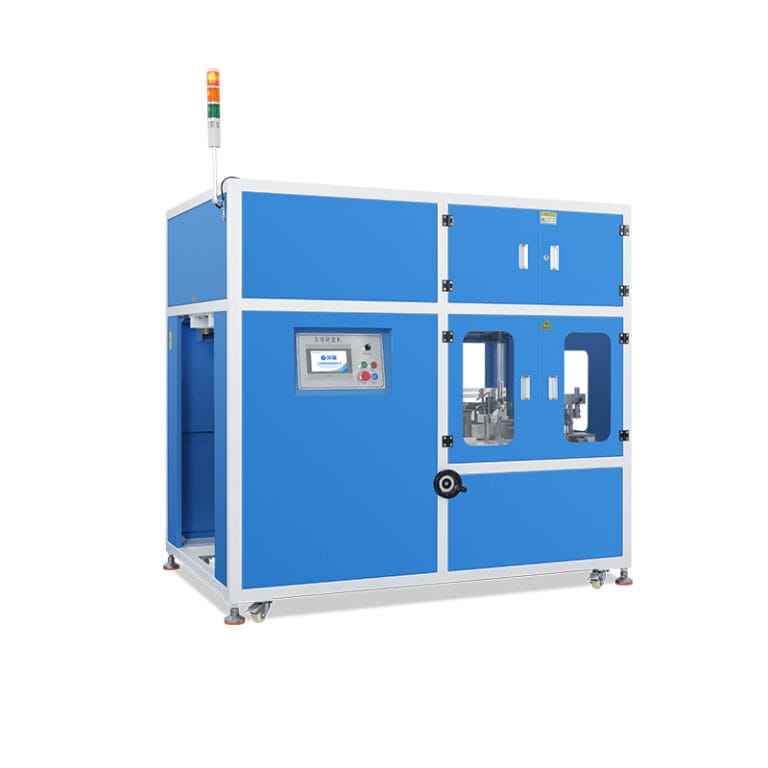
UBL Folding Machines
→ Adjust folding pressure quickly
→ Maintain perfect crease across SKUs
→ Support multi-size packaging with minimal setup
→ Remove dependence on human folding skill
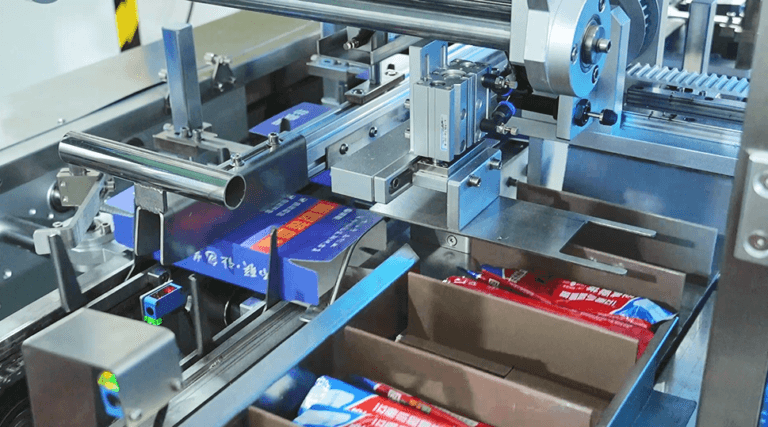
UBL HL-Z15 Cartoning Machine
→ Rapid format change
→ Algorithm-like stability
→ Error-proof feeding
→ Instant adaptation to new box types
→ Perfect for factories with rapidly changing order structures
UBL Bagging Machines
→ Adjustable sealing length
→ Stable sealing under variable materials
→ Works flawlessly across flexible production models
→ Zero degradation during multi-batch shifts
These are not “nice to have.”
They are mandatory for the future factory.
The New Rule of Manufacturing: Flexibility Beats Speed
Factories used to brag about output speed.
Now they brag about:
“How fast we can switch production.”
“How flexible our line is.”
“How many SKUs we can run in a single day.”
Speed is useless if your packaging line collapses when switching formats.
Hyper-flexible factories require:
– flexible folding
– flexible cartoning
– flexible bagging
– flexible sealing
– flexible loading
Your old packaging line is the opposite of flexibility.
The One Question Every Factory Must Answer in 2025
“Can my packaging line survive a flexible manufacturing model?”
If your honest answer is NO —
then your packaging line has no future.
It belongs to a world that no longer exists.
You can replace workers.
You can replace supervisors.
You can replace schedules.
But if you don’t replace your rigid packaging line…
you will lose orders
you will lose customers
you will lose efficiency
you will lose competitiveness
you will lose the race you didn’t even know started
The future factory is flexible.
If you aren’t —
then you aren’t part of the future.
| Trend Topic | Related Keywords | Machines Mentioned | Trend Insight | Recommended CTA |
|---|---|---|---|---|
| Hyper-Flexible Factory | flexible manufacturing, reconfigurable line, agile production | UBL Folding Machine, HL-Z15 Cartoning Machine | Factories need fast SKU/format switching | Upgrade to flexible packaging automation |
| SKU Change Pressure | multi-SKU packing, format switching | Bagging Machine, Cartoning Machine | Old lines can’t handle frequent changes | Adopt equipment with quick adjustment |
| Rigid Packaging Line Issues | slow switching, manual adjustments | Folding Box Machine | Human-dependent lines break flexibility | Automate to remove manual bottlenecks |
| Future Factory Standard | agile line, flexible automation | UBL Packaging Systems | Flexibility > speed in modern factories | Upgrade for future competitiveness |
Trending now