Manual Cartoning Makes OEM Factories Look Like OEMs — Even After They Launch Their Own Brand
Alyssa/ January 9, 2026 Return
Many food factories decide to build their own brand after years of OEM work.
They already know production.
They already know cost control.
They already know quality.
But when the first branded orders go out,
something feels familiar — in a bad way.
The product still looks like OEM output.Get A Quote
Why OEM-to-Brand Transitions Are So Difficult
For biscuit and snack factories,
moving from OEM to brand owner is a mindset shift.
You are no longer just delivering products.
You are delivering an image.
Customers don’t compare you to other factories anymore.
They compare you to brands.
And brands are judged visually, first.Get A Quote
Where Manual Cartoning Keeps You Stuck in OEM Mode
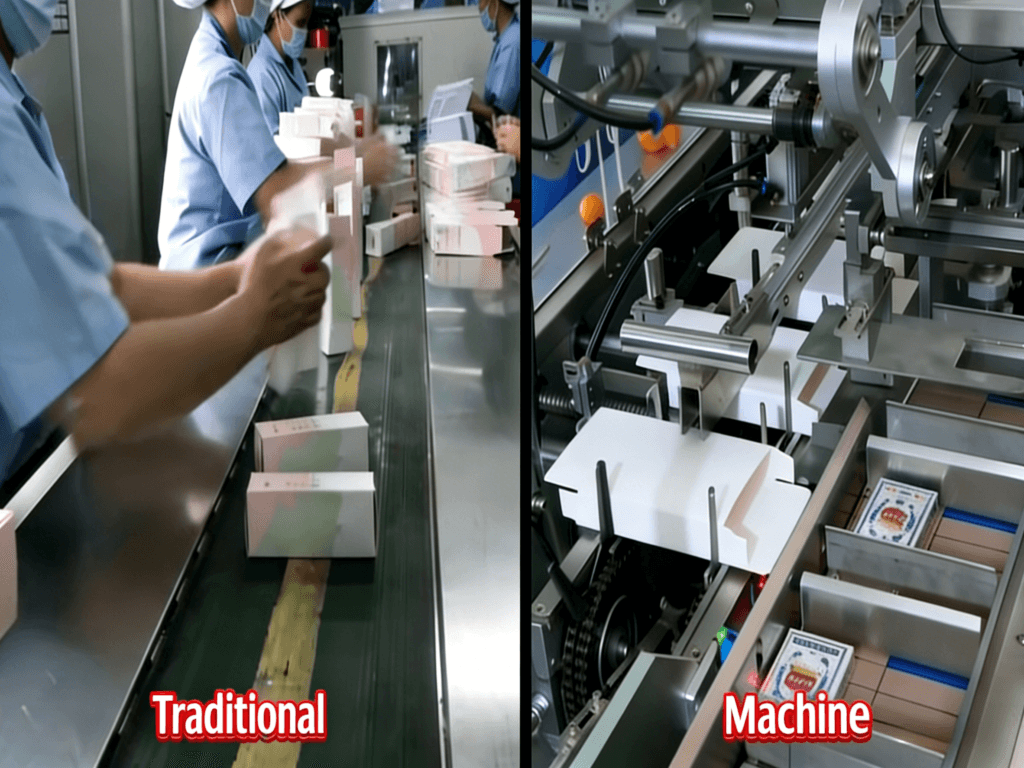
Manual cartoning happens during secondary packaging,
after individual packs are sealed.
In OEM production, variation is tolerated.
In branding, it is not.Get A Quote
Products don’t look consistent across cartons
With manual cartoning:
- Box fullness varies
- Product position shifts
- Visual neatness depends on the worker
This is acceptable for OEM orders.
It is damaging for brand perception.Get A Quote
Distributors and buyers sense “factory style”
When packaging looks inconsistent,
buyers often feel:
- “This looks like a factory product”
- “The brand is not fully mature”
- “Process control may be weak”
Even if the food is good,
the signal is wrong.Get A Quote
Why Branding Fails Quietly at This Stage
Most OEM-turned-brand factories focus on:
- Logo
- Design
- Marketing
But branding is not only what you say.
It is what you deliver repeatedly.
If cartons look different from batch to batch,
the brand promise feels unstable.Get A Quote
Why Manual Improvements Don’t Change the Perception
Factories often try to fix this by:
- Asking workers to be more careful
- Adding extra checks
- Rejecting the worst-looking cartons
These steps reduce errors,
but they don’t change the core problem.
Manual cartoning still produces natural variation.
And brands cannot grow on variation.Get A Quote
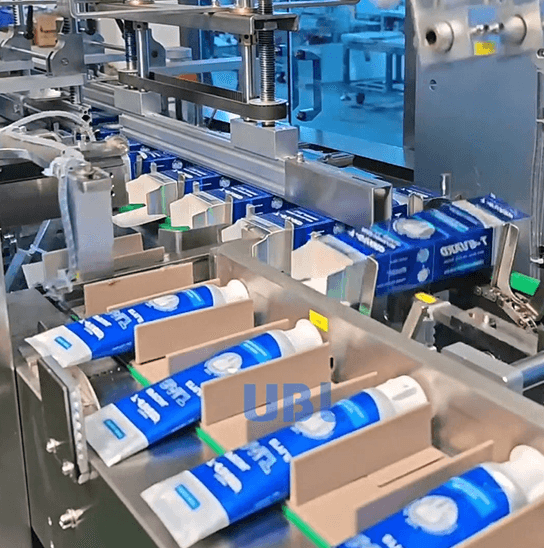
How a Cartoning Machine Helps Complete the Brand Shift
Here we are talking about secondary packaging—
cartoning after individual packs,
with no direct contact with food.
This is the easiest place
to move from “factory output” to “brand output”.Get A Quote
Every carton sends the same signal
- Same structure
- Same fullness
- Same appearanceGet A Quote
The product starts to look intentional
- Cleaner shelf presence
- More confidence from distributors
- Clear separation from OEM workGet A Quote
Branding finally matches ambition
- The brand looks controlled
- The brand looks repeatable
- The brand looks scalable
This is not about speed or labor.
It is about looking like a brand, not a supplier.Get A Quote
A Question Worth Asking
When your product is placed next to established brands,
does it look like it belongs there?
Or does it still quietly reveal
its OEM background?
For many food factories,
standardizing cartoning is the final step
in truly becoming a brand.Get A Quote
| Industry | Target Group | Transformation Stage | Main Pain Point | Solution Keyword |
|---|---|---|---|---|
| Food | OEM-to-Brand Factories | Brand Launch Phase | Packaging looks like OEM output | Automatic Cartoning Machine |
Trending now