The Rise of 24/7 Factories — And the Packaging Line That Can’t Survive It
Alyssa/ December 3, 2025 Return
The New Global Trend: Factories That Never Sleep
Have you noticed how many factories—especially in the US, UK, and Europe—are moving into a 24/7 continuous production model?
It’s everywhere on TikTok and Facebook:
“Night shift tour in a 24-hour factory.”
“Behind the scenes of a no-stop production line.”
“Machines running while the world sleeps.”
Consumers love it.
Investors love it.
Bosses love the idea of “non-stop productivity.”
But there’s one part of the factory that absolutely cannot handle 24/7 operation, even if the rest can:
the packaging line.
Your presses can run 24 hours.
Your molding machines can run 24 hours.
Your fillers and mixers can run 24 hours.
Your conveyors can run 24 hours.
But your packaging area?
It collapses before midnight.
Because packaging is the only part of the factory still chained to human speed, human fatigue, and human error.
And humans are not designed for 24/7.
The Emotional Breakdown of a Packaging Line in a 24/7 Factory
You’ve seen it.
You’ve lived it.
The first few hours look fine.
The folding machine is smooth.
The cartoning machine behaves.
The bagging machine seals consistently.
Workers feel energized.
Production looks stable.
Then the shift wears on.
Someone gets tired.
Someone loses focus.
Someone slows down.
Someone calls in sick.
Someone takes too long on break.
And when even one part of the packaging line drops, the entire 24/7 model collapses like dominoes.
Machines back up.
WIP stacks dangerously high.
Boxes fall out of alignment.
The cartoning machine jams.
The bagging machine rejects.
Supervisors panic.
Everyone starts running instead of working.
By 2 a.m., you’re no longer running a continuous factory—
you’re running a survival emergency.
And here’s the cold truth:
Your factory doesn’t fail because the machines can’t run 24/7.
It fails because your PACKAGING LINE can’t.
Why Packaging Fails First in 24-Hour Production
1. Human Fatigue Hits Packaging Harder Than Any Other Area
Packaging requires speed + repetitive precision.
That’s the lethal combination.
In every 24/7 factory, the packaging area is always the first to:
slow down
lose accuracy
make mistakes
fall behind
call for help
create bottlenecks
Machines don’t get tired.
Humans do.
2. Manual Packaging Cannot Keep Up with Continuous Flow
Your folding machine may be fast.
Your cartoning machine may be advanced.
Your production line may be powerful.
But if you still depend on humans to:
load boxes
fold boxes
feed cartons
check sealing
adjust alignment
fix jams
then 24/7 production is a fantasy.
3. Packaging Errors Multiply After Midnight
You know this.
You’ve seen it a thousand times.
After midnight, packaging becomes a minefield:
More jams
More crooked folds
More misfeeds
More sealing defects
More rework
More frustration
More accidents
And every small mistake in packaging becomes a big disaster in a 24/7 model.
Factories Worldwide Are Discovering a Brutal Reality
The 24-hour trend isn’t the problem.
Your packaging line is.
Factories in the US, UK, Germany, Australia—they’re all realizing the same thing:
You can only run 24/7 if your PACKAGING is also automated 24/7.
Everything else can be fast, efficient, continuous…
but if the packaging line is manual, inconsistent, unstable, or labor-dependent?
Your entire 24/7 vision collapses.
That’s why companies upgrading to automation START with packaging—not with fancy robots, not with CNC upgrades, not with new forklifts.
PACKAGING FIRST.
Because packaging is the weakest link.
This Is Where UBL Machines Become 24/7 Lifesavers
Factories choose UBL packaging equipment for one main reason:
Machines don’t get tired.
Machines don’t quit.
Machines don’t slow down.
Machines don’t ask for a break.
Machines don’t call in sick.
UBL folding machines create clean, identical folds whether it’s 10 a.m. or 4 a.m.
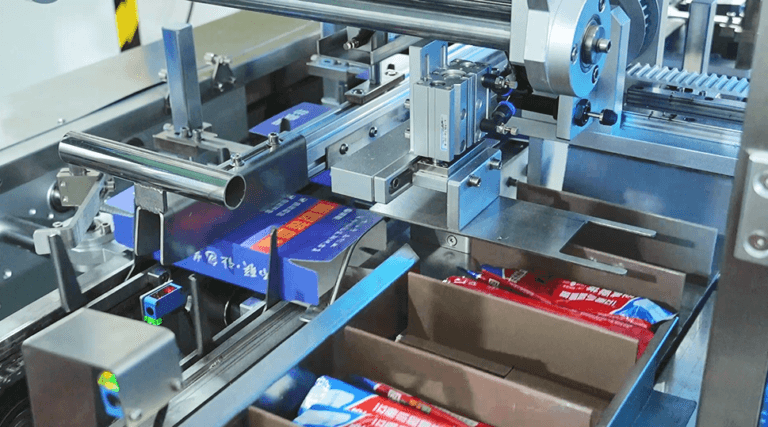
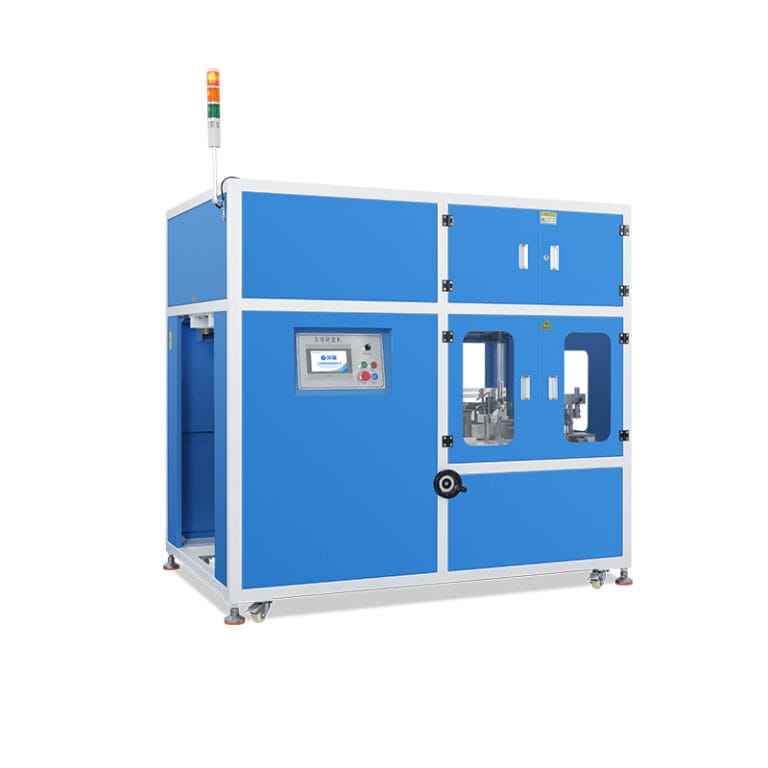
UBL HL-Z15 cartoning machines form boxes with the same precision at hour 1 and hour 20.
UBL bagging machines seal consistently during every shift—no changes, no fatigue, no mood swings.
A human-dependent packaging line breaks after 8 hours.
A UBL-automated packaging line can run 24 hours without losing quality.
That’s why 24/7 factories choose UBL—
not for glamour,
not for automation hype,
but because continuous production requires continuous packaging.
The New Benchmark: 24 Hours of Stability, Not 24 Hours of Activity
Running machines for 24 hours is easy.
Running packaging for 24 hours is the real test.
And if your packaging line isn’t automated,
you already know the outcome:
overtime wages
inconsistent sealing
crooked folds
collapsed cartons
delayed shipments
worker exhaustion
huge waste
customer complaints
production chaos
But when everything is automated?
folding is perfect
cartoning is stable
sealing is clean
alignment stays precise
output never slows
complaints disappear
your factory finally breathes
That’s the power of UBL automation.
The One Question Every 24/7 Factory Must Answer
Can your packaging line survive 24 hours?
Or is it the reason your factory can’t?
If your answer scares you—
then you already know what your next upgrade must be.
| 24/7 Trend Topic | Related Keywords | Machines Involved | Trend Connection | Suggested CTA |
|---|---|---|---|---|
| 24/7 Continuous Production | 24/7 factory, continuous production, nonstop packaging | Folding Machine, Cartoning Machine, Bagging Machine | Global push for uninterrupted factories | Automate packaging to sustain 24-hour output |
| Packaging Line Bottlenecks | packaging bottleneck, packaging slowdown | HL-Z15 Cartoning Machine, Folding Box Machine | Late-shift inefficiency trend | Remove human dependency with automation |
| Labor Fatigue at Night | night shift errors, manual packaging issues | Bagging Machine, Folding Machine | Worker shortage + fatigue trend | Replace repetitive tasks with stable machines |
| Automation Adoption | packaging automation, end-of-line automation | UBL Packaging Solutions | AI-driven factory trend | Upgrade to UBL systems for 24/7 stability |
Trending now