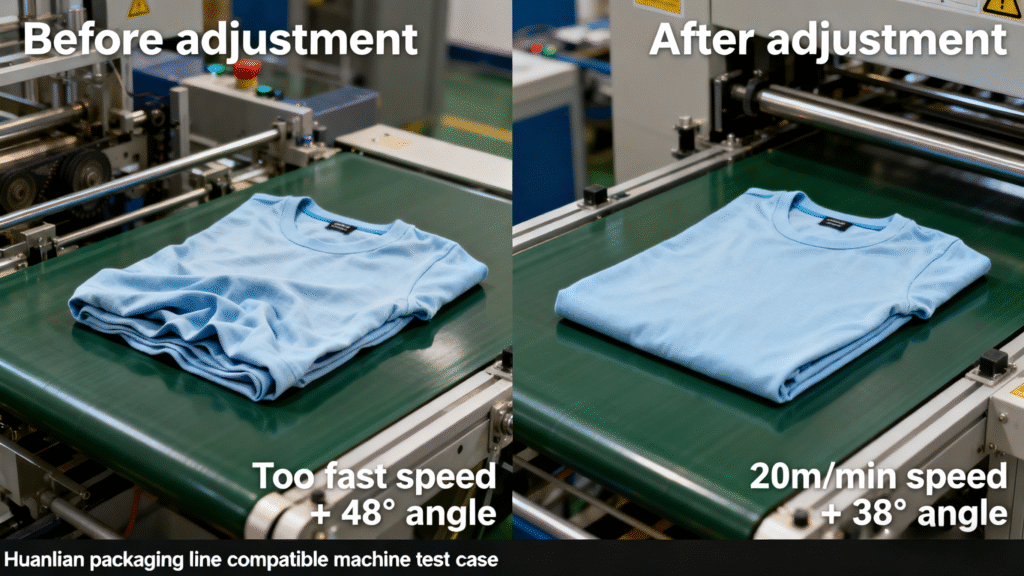
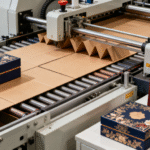
Smooth, wrinkle-free folds are essential for clothing packaging—yet many factories struggle with persistent wrinkles on their clothing folding machines. Before replacing parts or calling for expensive maintenance, the issue often lies in two easily adjustable settings: conveyor speed and folding knife angle. With these practical tips, you can significantly reduce wrinkles, and Huanlian Packaging, which offers compatible auxiliary equipment for clothing packaging lines, can further support your machine optimization.
1. Conveyor Speed: Match Speed to Fabric Type
The root cause of most speed-related wrinkles is a mismatch between conveyor speed and fabric weight . For lightweight fabrics (like chiffon or thin cotton), a too-fast conveyor can stretch the fabric, creating loose folds and wrinkles. Slow the speed by 10-15%—you’ll notice the fabric lies flatter as it moves toward the folding mechanism. For heavyweight fabrics (such as denim or thick sweatshirts), a slow conveyor may cause the fabric to pile up, leading to pressed-in wrinkles. Increase the speed slightly (5-8%) to ensure steady, even movement. Most modern folding machines, including models compatible with Huanlian’s packaging lines, have a digital speed control panel—start with small adjustments and test 3-5 pieces of clothing after each change to avoid overcorrection.
2. Folding Knife Angle: Align with Fold Lines
A misaligned folding knife is another major culprit behind wrinkles. If the knife angle is too steep (more than 45°), it can “snap” the fabric into place, leaving sharp, unwanted creases . If it’s too shallow (less than 30°), the fabric may slide off the knife, resulting in uneven, wrinkled folds. The ideal angle varies by fold type: for single folds (like sleeve folds), set the angle to 35-40°; for double folds (like body folds), adjust to 40-45° . Use the machine’s built-in angle adjustment bolts—loosen the locking nut, tweak the angle gradually, and tighten the nut once aligned. Huanlian’s technical team often advises customers to mark the original angle position before adjusting, making it easy to revert if needed. Additionally, ensure the folding knife is clean and free of lint—debris can also cause fabric snags and wrinkles.
After adjusting both settings, run a test batch of the same fabric type. If minor wrinkles remain, fine-tune the speed by 2-3% or the angle by 1-2°—small tweaks often yield perfect results. For Huanlian-supported clothing packaging lines, these adjustments also enhance compatibility with subsequent packaging steps, ensuring a smooth, efficient workflow.