Why Fulfillment Centers in 2025 Are Turning to Automated Folding Machines to Survive Peak Season
Alyssa/ December 5, 2025 Return
The Pressure Inside a Modern Fulfillment Center
Every year, e-commerce grows faster than expected. More orders, more SKUs, more returns, more packaging work.
In a fulfillment center, the busiest job is often the simplest one: preparing boxes. Workers fold hundreds or even thousands of boxes every shift. During peak season, the pressure rises so fast that supervisors can barely organize manpower in time.
Human labor used to work. But in 2025, it’s no longer enough.
Workers get tired. Many quit after a week.
Training takes time. Schedules change every day.
And once one worker slows down, the entire packing line slows down with them.
Fulfillment centers don’t just need “hands.”
They need stability, speed, and predictable output — something manual folding can no longer offer.
Why Manual Box Folding Breaks Down During Peak Season
Unstable speed creates unpredictable delays
Some workers fold fast, some slow, and almost everyone slows down after hours of repetitive motion. When order volume jumps suddenly, manual folding simply cannot keep up.
Delivery time becomes a guessing game.
Labor cost rises faster than order volume
Even in low-cost areas, hourly wages and overtime rates keep climbing. A single folding position may look cheap, but when multiplied across shifts, the number becomes surprisingly high.
Training never stops
Seasonal workers come and go. The constant cycle of hiring, training, and replacing workers drains time and money.
Inconsistent folding reduces customer satisfaction
Crooked edges, weak locks, and uneven folds lead to damaged shipments, poor unboxing experiences, and negative reviews.
For fulfillment centers that handle different box sizes and daily order spikes, these problems are not “minor issues” — they directly affect delivery speed and customer ratings.
Automation Steps In as the New Standard
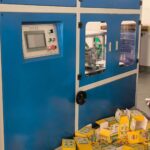
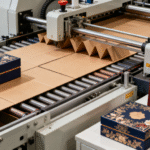
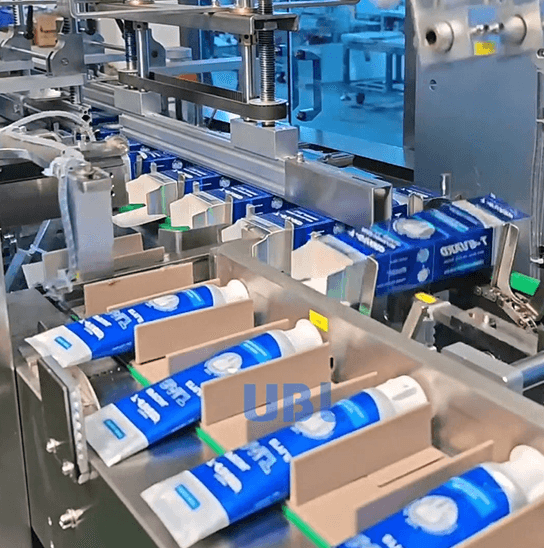
Because of these problems, more fulfillment centers are upgrading the folding position with an automatic folding machine — a compact device placed at the packaging station that folds boxes continuously.
Most modern models process 720–900 boxes per hour with steady, stable output.
They run 24 hours a day without slowing down.
And in many real cases, one machine replaces 2–4 manual workers depending on the workflow.
Automation is no longer about “replacing people.” It’s about keeping promises to customers.
Why Automatic Folding Machines Fit Fulfillment Centers Perfectly
Stable Output Even During Rush Hours
E-commerce orders always come in waves — mornings, evenings, weekends, promotions. Humans slow down, but machines don’t.
The pace stays the same: fast and steady.
A machine folding 720–900 boxes per hour keeps the entire packing area running smoothly even when order volume suddenly doubles.
Uniform Folding Improves the Customer Experience
Fulfillment centers handle thousands of parcels daily. If the folding quality is inconsistent:
- some boxes pop open
- some get crushed during shipping
- some look unprofessional
- some affect customer perception of the brand
With machine-folded boxes, every box looks the same — clean, sharp, professional. This small improvement produces a big impact on return rate and customer reviews.
Better folding = better shipping = fewer complaints.
Lower Labor Cost Without Lowering Quality
An automatic folding machine reduces the need for extra workers during peak season.
Most fulfillment centers discover something surprising:
The machine’s cost for one year is often lower than seasonal labor for two months.
And unlike a seasonal worker, the machine:
- does not quit
- does not need training
- does not slow down
- does not disappear after peak season
It stays productive every day, all year long.
Easy to Integrate Into Existing Workflows
Fulfillment centers often worry that automation requires rebuilding the whole packing area. But folding machines are different — they are plug-and-play devices.
They connect easily with:
- conveyor belts
- scanning stations
- weighing stations
- sealing machines
- labeling systems
So the upgrade is simple:
replace one table with one machine, and the workflow becomes faster instantly.
A Real Scene: Before and After Automation
Before: chaotic peak season
Workers crowd around folding tables.
Some fold fast, some slow.
New hires struggle to keep up.
Supervisors run between stations trying to balance manpower.
Boxes pile up faster than they can be folded.
Everyone feels stressed.
After: calm, steady operation
One automatic folding machine stands quietly at the station.
It folds hundreds of boxes every hour.
No breaks. No slowdowns. No confusion.
Workers now focus on:
- scanning
- picking
- packing
- sealing
- shipping
Instead of wasting hours folding boxes by hand.
The whole fulfillment center suddenly feels calmer — and more productive.
Why Many Centers Choose UBL Equipment
UBL, a well-known automation brand in the packaging industry, builds folding machines specifically designed for high-SKU fulfillment centers. Their machines support:
- 720–900 pcs/h real output
- 24/7 stable operation
- quick size switching
- 2–4 labor reduction
- clean, uniform folding quality
Because UBL focuses on packaging equipment only, their designs fit easily into fast-moving e-commerce environments without changing the rest of the line.
Many centers choose UBL simply because it “just works.”
It’s not flashy. It’s not complicated.
It solves the problem and keeps the line moving.
Why Automation Is Becoming a Survival Strategy
Fulfillment centers don’t compete on price anymore. They compete on:
- delivery speed
- stability
- accuracy
- customer reviews
Manual folding cannot keep up with these demands.
Automatic folding machines help fulfillment centers:
- handle peak seasons without panic
- reduce overtime and extra hiring
- keep packaging lines moving smoothly
- protect the customer experience
- reduce cost across the year
In 2025, automation is not a luxury. It’s survival.
A folding machine may be small, but what it brings is big:
More stability.
More speed.
More control.
More profit.
| Issue | Cause | Impact on Production | Recommended Maintenance | Related Equipment (UBL) |
|---|---|---|---|---|
| Boxes piling up during peak hours | Manual folding speed too slow | Line congestion, late shipments | Automate folding station to stabilize workflow | UBL Automatic Folding Machine |
| Inconsistent folding quality | Different folding techniques by workers | Weak boxes, damaged parcels, customer complaints | Use automated folding for uniform box quality | UBL Precision Folding Unit |
| High labor cost during peak season | Heavy dependence on temporary workers | Overtime cost spikes, unstable output | Reduce folding labor with automation | UBL Folding & Forming System |
| Training delays | New hires learn slowly | Slow startup, reduced efficiency | Replace manual folding with automated cycle | UBL Smart Packaging Workcell |
| Box lock failures | Incorrect manual locking angle | Boxes burst during shipping | Use machine-defined locking pattern | UBL Box Locking & Forming Module |
Trending now