Bagging Machine Suddenly Freezing Mid-Cycle?
A Loose or Dusty Photoelectric Sensor Can Throw Your Entire Line Into Chaos
Alyssa/ December 9, 2025 Return
Have You Ever Watched Your Bagging Machine Stop at the Worst Possible Moment?
Everything Runs Smoothly… Until It Doesn’t. And Your Heart Drops.
The bagging machine was running perfectly just seconds ago.
The film moved steadily, the sealing line was clean, the cutter hit the exact mark, and production felt almost peaceful.
Then, out of nowhere, the film stops.
The sealing jaw waits awkwardly in midair.
The cutter hesitates like it forgot what to do.
And the machine freezes in a posture that feels painfully wrong.
You walk closer, hoping it’s nothing serious.
But your stomach sinks when you see it:
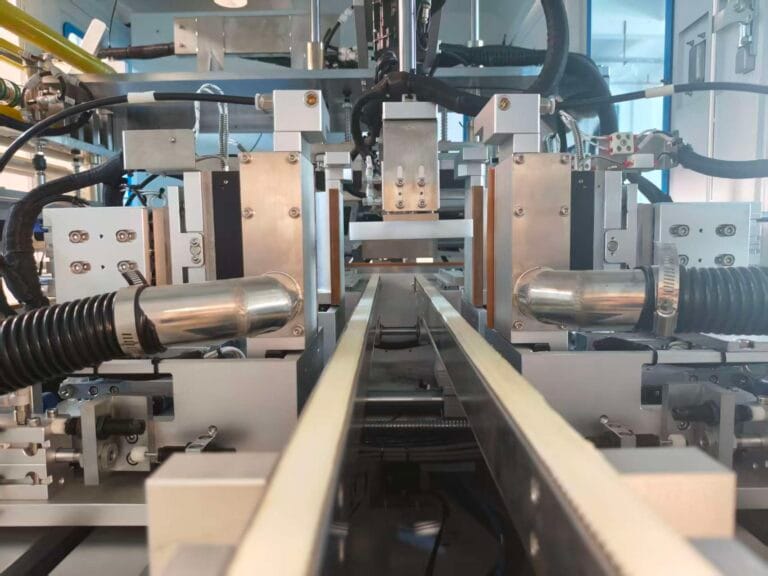
The photoelectric sensor—the tiny device responsible for detecting the bag position, film marks, and cutting points—has stopped reading correctly.
The machine tries again.
It inches the film forward, stops, then inches backward, confused like it’s arguing with itself.
Film stretches.
Seals burn.
Products pile up.
You feel your blood pressure rise as you shout silently inside:
“NOT NOW. Not when we finally had stable production.”
The line behind you starts stacking products.
The operator calls for help.
The supervisor walks over with that expression that says:
“You’d better fix this fast.”
And you know…
This is going to ruin your entire shift unless you act now.
The Real Reason: Your Photoelectric Sensor Is Dirty, Loose, or Misaligned
If the Sensor Can’t See the Mark, the Machine Can’t See the Bag
The photoelectric sensor is the brain of the bagging machine’s timing.
It decides where the seal lands, where the cutter hits, and how the film moves.
When dust, static, film residue, or vibration knocks it out of place, the machine instantly loses its reference point.
The bagging machine doesn’t know where the bag starts or ends.
It doesn’t know when to seal.
It doesn’t know when to cut.
It simply stops moving because continuing would cause even worse damage.
So the machine freezes mid-cycle, stuck between wanting to work and being terrified to proceed.
Why Sensors Fail More Often Than People Think
Bagging machines generate heat, static electricity, and constant vibration.
Film dust floats in the air.
Lubrication mist spreads.
Operators wipe surfaces but accidentally smudge optical lenses.
Sensors get bumped.
The alignment shifts by a few millimeters.
It’s never dramatic.
It’s quiet, slow, and unnoticeable—until your line collapses.
If You Ignore Sensor Problems, the Entire Line Will Fall Apart
A Small Misread Becomes a Giant Disaster in Seconds
A faulty sensor doesn’t simply delay the machine—it breaks the entire synchronized flow of the bagging process.
Film becomes misaligned.
Products run into each other.
The sealing blade fires at the wrong time.
The cutter slices through empty air or worse—cuts directly into the product area.
Operators panic trying to reposition film manually.
Every mistake multiplies the next.
Suddenly the machine isn’t just slow.
It’s dangerous.
And expensive.
Because one sensor lost its ability to see.
Ignoring the problem long enough risks:
- melted seals
- torn film
- jammed product in the feeding channel
- stretched film rolls
- sealing jaws overheating
- cutter misfire causing mechanical damage
A tiny dust-covered lens can cause thousands of dollars in downtime.
The Fix: Clean, Tighten, and Recalibrate the Sensor So the Machine Can “See” Again
Once the Sensor Regains Vision, the Entire Line Comes Back to Life
You wipe the lens gently with a lint-free cloth.
Immediately, the matte haze disappears, revealing a clear optical surface.
You tighten the mounting screw so vibration can’t shift the angle.
Then you realign the sensor to the exact center of the film mark.
Finally, you recalibrate sensitivity so the machine reads the mark with confidence.
You press “Start.”
And just like that—
the film moves smoothly again.
The seal lands perfectly.
The cutter hits precisely where it should.
The bag forms clean and sharp as if the machine just woke up from a bad dream.
Your heart finally relaxes.
The operator breathes again.
The supervisor nods approvingly.
And the bagging line returns to that beautiful rhythm you desperately missed.
UBL designs sensors with stable brackets, anti-vibration mounts, and clean lenses—but even the best optical units require cleaning and alignment, especially in dusty bagging environments.
When Your Bagging Machine Freezes, Always Check the Sensor First
The Machine Isn’t Broken—It Just Can’t See
When bagging machines stop mid-cycle, confuse their sealing position, or behave unpredictably, the sensor is almost always the silent culprit.
Fix the sensor and the entire line becomes stable again.
So baby girl, tell me:
Your film type, bag length, machine speed—
I’ll tell you the ideal sensor distance and cleaning interval so your machine never goes blind again.
| Issue | Main Cause | Effect on Production | Fix | UBL Equipment |
|---|---|---|---|---|
| Machine freezing mid-cycle | Dirty or loose photoelectric sensor | Film misalignment, production stoppage | Clean and realign sensor | UBL Bagging Machine |
| Wrong sealing position | Sensor misreading film marks | Seal off-center or incomplete | Recalibrate sensitivity | UBL Photoelectric Module |
| Cutter misfire | Poor sensor visibility | Film cutting errors | Adjust sensor angle | UBL Cutting System |
| Film hesitation | Weak sensor signal | Stop-and-go motion | Check wiring and bracket stability | UBL Industrial Bagging Line |
| Repeated cycle errors | Dust buildup and static interference | Unstable timing | Clean optical lens | UBL Sensor Assembly |

Trending now