Opportunities and Challenges for Packaging Equipment Amid the "Small Packaging" Food Trend
Alyssa/October 15,2025
The global “small packaging” food trend—driven by rising single-person households, on-the-go consumption, and demand for portion control—has become a defining shift in the food industry. From 50g single-serve cereal packs to 100ml mini yogurt cups, this trend is not just a product design choice but a catalyst for innovation in packaging equipment. For manufacturers like Huanlian Packaging, it brings both promising opportunities and complex challenges that demand adaptive solutions.
Opportunities lie in the surging demand for flexible, high-precision packaging systems. Unlike traditional large-format packaging, small food packs require equipment to handle smaller dimensions (often 50×30×10mm or less) with minimal material waste. Huanlian’s modular packaging lines, such as its HL-ZP20 pre-made bagging machine and HLT-301 automatic labeling machine, excel here: they can switch between 8-10 different small pack sizes in under 20 minutes, a critical advantage for brands launching multi-SKU small-batch products. Additionally, the trend boosts demand for integrated lines—combining filling, sealing, and labeling—that ensure consistency for tiny packages, where even 1mm deviations in sealing can cause leakage. Huanlian’s fully automated small-pack lines, for example, have seen a 40% increase in orders from snack and dairy brands over the past year.
Cost efficiency is another opportunity. Small packaging often means higher production volumes (e.g., 10,000+ single-serve packs daily), and equipment that reduces labor and material waste becomes a priority. Huanlian’s servo-driven small-pack machines cut material scrap by 25% compared to conventional equipment and lower labor needs by 70%, as they operate continuously without manual adjustment. For mid-sized food factories, this translates to a 15-20% reduction in per-unit packaging costs—an attractive proposition in a competitive market.
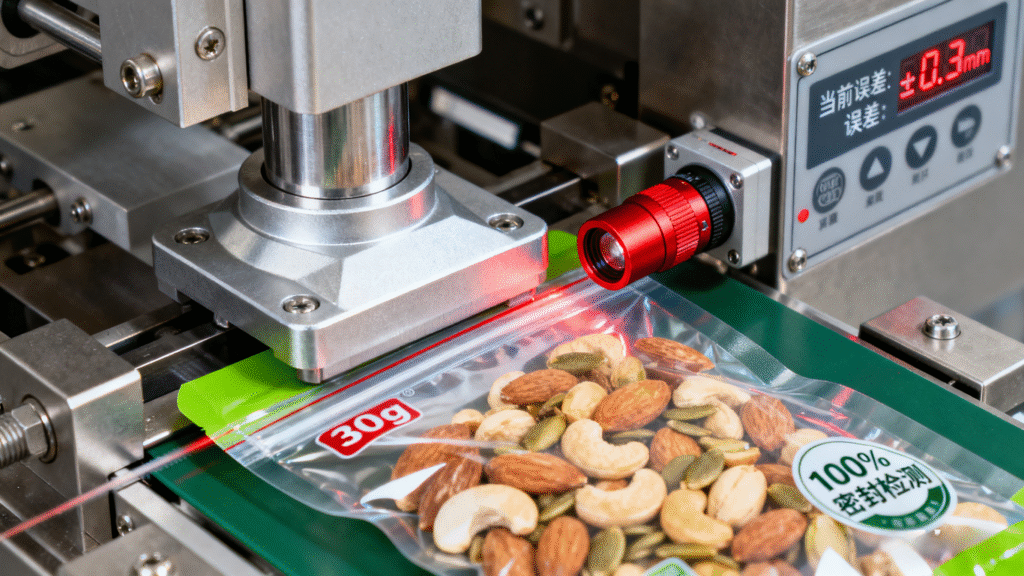
Yet challenges persist, starting with precision requirements. Small food packs are far more sensitive to equipment errors: a misaligned seal on a 30g nut pack can render the product unmarketable, while uneven labeling on a mini sauce sachet damages brand image. This demands packaging equipment with ultra-high accuracy (±0.5mm for sealing, ±1mm for labeling), which requires advanced sensors and servo control systems—investments that smaller equipment suppliers may struggle to afford. Huanlian addresses this by integrating high-precision optical sensors into its small-pack lines, but the technology adds to initial costs, creating a barrier for some small manufacturers.
Another challenge is compatibility with diverse small-pack formats. Small packaging comes in endless variations: stand-up pouches for snacks, sachets for condiments, and mini cartons for baked goods. Equipment must adapt to different materials (thin films, lightweight paperboard) and closure types (heat seals, zip locks). While Huanlian’s modular designs help—its HL-LA74F dual-station machine can handle both pouches and sachets—constant format changes still require regular maintenance and operator training, increasing operational complexity.
Sustainability pressures further complicate matters. Consumers and regulators now demand small packs that use less plastic, which means packaging equipment must work with eco-friendly materials like compostable films or recyclable paper. These materials are often more fragile than traditional plastics; for example, compostable films require lower sealing temperatures to avoid degradation. Huanlian has responded by developing temperature-adjustable sealing modules for its small-pack machines, but testing and optimizing for each new eco-material remains time-consuming.
The “small packaging” trend is reshaping the food industry—and with it, the packaging equipment sector. For forward-thinking suppliers like Huanlian, the key is to turn challenges into differentiation: leveraging precision technology, modular design, and sustainability-focused innovation to meet brands’ evolving needs. For food manufacturers, partnering with equipment providers that understand these dynamics is essential to capitalize on the small-pack opportunity and stay ahead in a market where size truly matters.
Newsletter Updates
Enter your email address below and subscribe to our newsletter

Trending now