As a food factory owner with 15 years of experience, I’ve learned expensive lessons from wrong packaging machine purchases. Many peers fall for common traps—choosing cheap models that break frequently, or overpaying for “top brands” that don’t fit their production needs. Here’s my practical guide to smart selection.
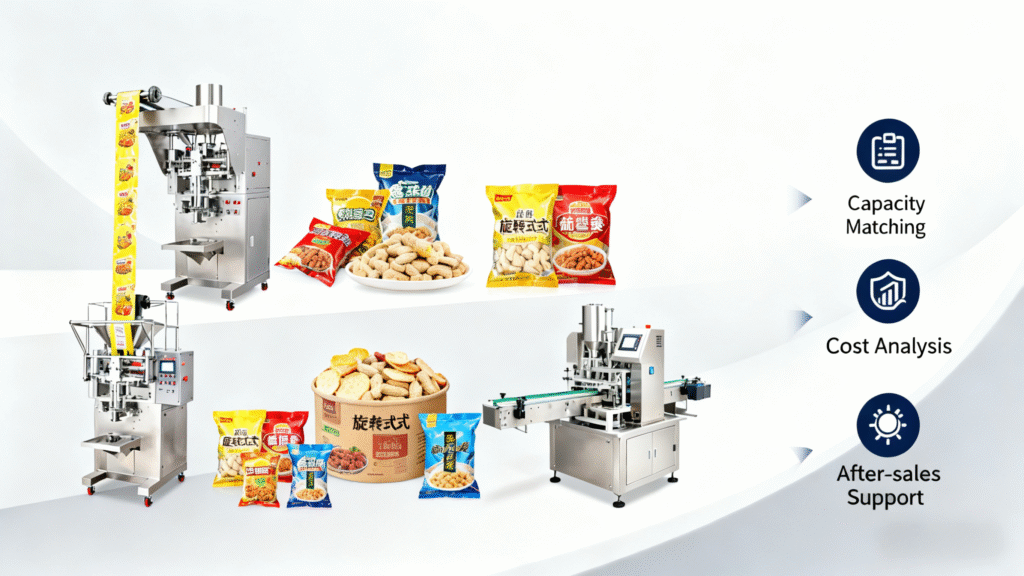
First, match equipment to your product and scale. Liquid products need leak-proof filling systems, while powders require anti-dust designs . A small bakery doesn’t need a high-speed rotary machine costing $50k; a vertical packager with 30-50 bags/min is sufficient. Ignore “one-size-fits-all” claims—there’s no “best” machine, only the “most suitable” .
Second, calculate total life cycle cost, not just upfront price. A 10k machine might seem budget−friendly,but if it needs monthly repairs and wastes 5
15k extra in two years . Prioritize 304 stainless steel parts and IP65-rated electrical components—they reduce corrosion and downtime .
Third, never overlook after-sales support. Last year, our old machine broke during peak season; the supplier took 7 days to respond, costing $20k in lost orders. Choose vendors offering 48-hour on-site service and a local spare parts warehouse . Remote diagnostic tools are a bonus—they fix 90% of issues without waiting .
Avoid these mistakes: chasing low prices over performance, obsessing over brands instead of compatibility, and ignoring future adaptability. A modular machine that handles multiple package sizes will serve you longer as your business grows .

Hi, this is a comment.
To get started with moderating, editing, and deleting comments, please visit the Comments screen in the dashboard.
Commenter avatars come from Gravatar.