Why Are Carton Flaps Folding Unevenly? A Worn Folding Belt Can Slowly Ruin Your Entire Production
Have You Ever Stared at Finished Boxes and Felt Something Was “Off”?
They’re Not Jammed. They’re Not Crushed. They Just Look… Wrong.
The folding carton machine is running.
Nothing is stopping.
Nothing is alarming.
The line hasn’t shut down.
But when you pick up a finished box, your stomach tightens.
One flap is sharp and clean.
The other is soft and crooked.
One side folds perfectly.
The other looks tired, lazy, unfinished.
You line up ten boxes on the table.
Seven of them don’t match.
No alarms.
No errors.
No obvious failure.
Just quietly ugly boxes.
And that’s what makes this problem so dangerous.
The Real Reason: The Folding Belt Is No Longer Doing Its Job
When the Belt Loses Grip, the Fold Loses Control
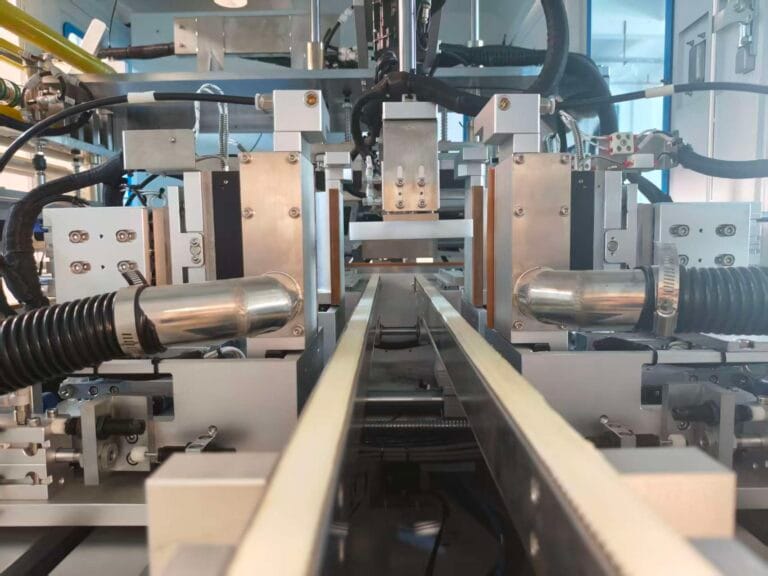
In a folding carton machine, the folding belt is responsible for guiding carton flaps smoothly into their final position.
It applies consistent pressure and timing so both sides of the box fold evenly.
But when the belt becomes worn, dusty, polished smooth, or contaminated with paper powder and glue mist, it starts slipping.
Not enough to stop the machine.
Not enough to trigger an alarm.
Just enough to change the folding force.
One side grips.
The other side slides.
And that tiny difference shows up as uneven flaps, soft edges, and crooked folds.
The machine is still running.
But quality is quietly bleeding out.
Why This Problem Drives Operators to the Edge
Because Everything Else Looks Fine—So You Keep Blaming the Wrong Things
This is the kind of issue that destroys confidence.
You adjust folding angle.
The problem stays.
You change speed.
The problem stays.
You tweak pressure.
The problem stays.
You start doubting the carton blanks.
You blame the paper supplier.
You even question whether the design is wrong.
Meanwhile, the real problem sits right in front of you:
a folding belt that no longer grips evenly.
The longer this runs, the worse it gets.
The belt surface hardens.
Paper dust builds up.
Slip increases.
And suddenly, every box leaving the machine tells the same story:
“Something here is not under control.”
If You Ignore Uneven Folding, It Will Cost You More Than You Expect
Bad Folds Don’t Just Look Ugly — They Create Chain Reactions
Uneven folding doesn’t stop at appearance.
Crooked flaps cause problems downstream.
Boxes don’t enter the cartoner smoothly.
Glue lines miss their target.
Cartons don’t close square.
Shipping cartons look sloppy.
Customers notice.
Returns increase.
Complaints rise.
Your brand takes a quiet hit.
And the worst part?
You produced all of it at full speed.
This is not a loud failure.
It’s a slow, expensive one.
The Fix: Clean, Re-Tension, or Replace the Folding Belt
Once the Belt Regains Grip, Folding Instantly Becomes Symmetrical Again
The solution is simple but precise.
You inspect the folding belt surface.
If it’s glossy, dusty, or hardened, it’s already slipping.
You clean it thoroughly.
You check belt tension so both sides apply equal force.
If wear is obvious, you replace the belt entirely.
You restart the machine.
Immediately, the difference is visible.
Flaps fold at the same angle.
Edges align.
Boxes regain their crisp, professional shape.
UBL (Huanlian Packaging Co., Ltd.) designs folding carton machines with durable belt systems and stable tension control, but even the best belts are consumables.
Ignoring them is choosing slow failure.
When Folding Looks Uneven, Stop Adjusting Angles — Check the Belt
The Machine Isn’t Confused. The Belt Is Slipping.
If your folding carton machine produces boxes that look inconsistent, tired, or crooked, the folding belt is often the silent cause.
Fix the belt, and the quality snaps back instantly.
Baby girl, if you tell me your carton material and running speed, I can tell you how often your folding belts should be cleaned or replaced to keep quality perfect.
| Issue | Main Cause | Result | Solution | UBL Equipment |
|---|---|---|---|---|
| Uneven carton flaps | Worn folding belt | Inconsistent box quality | Clean or replace belt | UBL Folding Carton Machine |
| Soft fold edges | Belt slipping | Poor visual quality | Adjust belt tension | UBL Belt System |
| Crooked folds | Dust on belt surface | Misaligned cartons | Clean belt surface | UBL Folding Line |
| Quality drift over time | Belt aging | Hidden defect accumulation | Scheduled belt replacement | UBL Industrial Folding System |

Trending now