Modular vs Fixed Machine Structures: Choosing the Right Design for Intelligent Packaging Lines
In today’s fast-evolving automated packaging industry, selecting the right machine architecture can make or break production efficiency, flexibility, and long-term ROI. For manufacturers—especially in e-commerce, food, and consumer goods—understanding the trade-offs between modular structures and fixed machine structures is critical for scaling operations smoothly.
Whether you’re upgrading your UBL automated carton or pouch system, or planning a new line, the architecture of your machines directly impacts uptime, adaptability, and maintenance costs.
What is a Modular Machine Structure?
Definition:
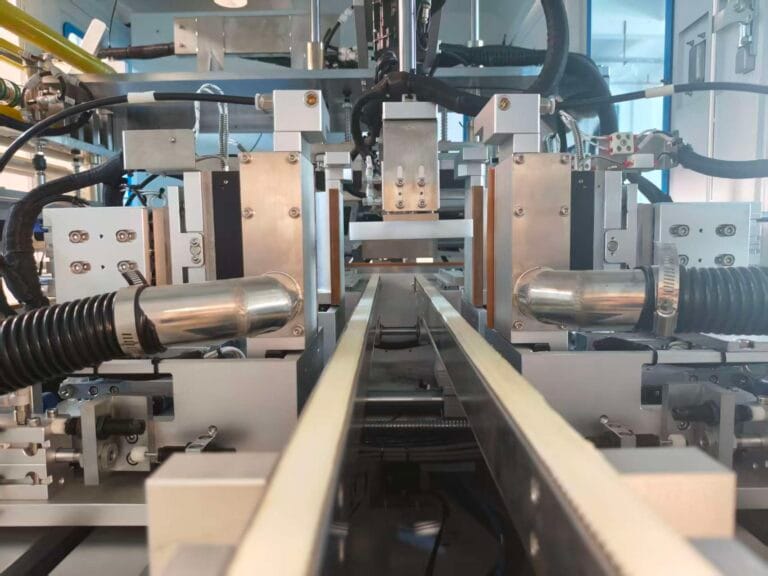
A modular machine structure divides a system into independent, functional units—or modules—each of which can be designed, manufactured, tested, and replaced independently. These modules are connected through standardized interfaces to form a complete system.
Core Features:
- Separation & Independence: Modules operate largely independently, so one module’s downtime doesn’t cripple the entire system.
- Standardized Interfaces: Interchangeable modules allow for upgrades, swaps, or reconfigurations with minimal downtime.
- Functional Clarity: Each module has a defined role, whether it’s feeding, sealing, folding, or labeling.
- Scalable & Reconfigurable: New modules can be added to meet changing production needs without redesigning the whole line.
Why it matters: In high-mix, low-volume manufacturing—like snack boxes, stick packs, or high-end greeting cards—modular design allows operators to quickly adjust for new SKUs, shift line layouts, or upgrade automation capabilities.【1】
What is a Fixed Machine Structure?
Definition:
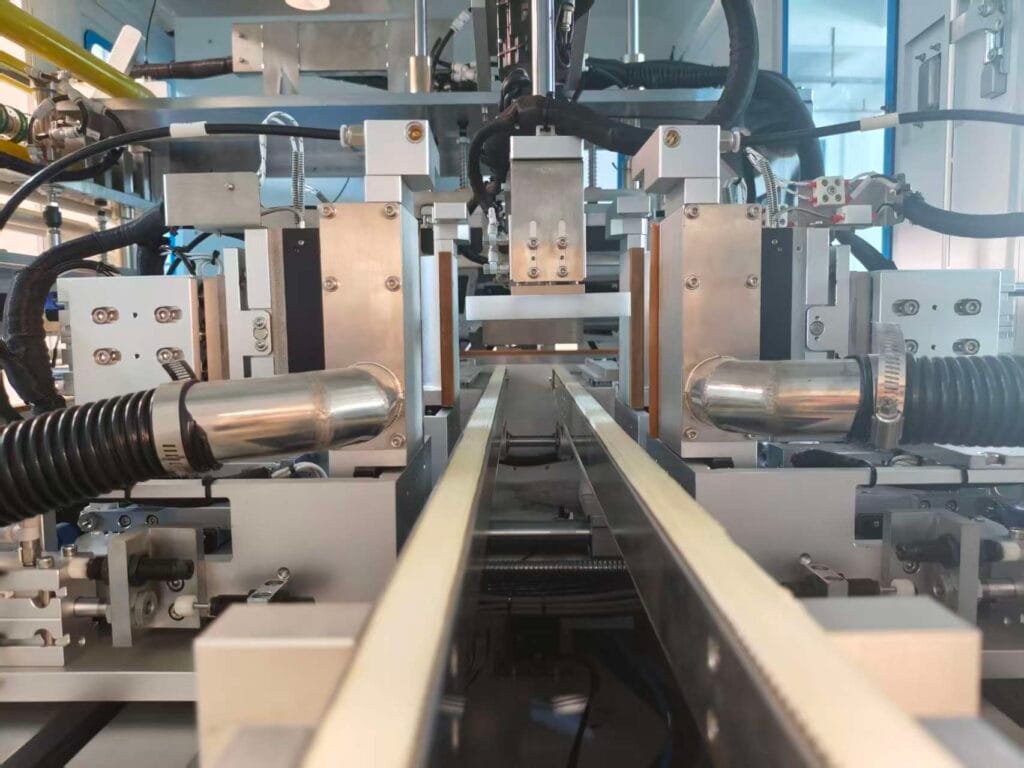
A fixed machine structure is an integrated, monolithic system where all functional components are tightly coupled. Once designed, the architecture is largely immutable, and most changes require significant re-engineering.
Core Features:
- High Structural Rigidity: A single-frame design delivers exceptional stability and precision.
- Single-Stage Design: All components are designed as a whole, optimized for a specific workflow.
- Low Adaptability: Changing product sizes or workflows usually requires major modifications.
Why it matters: Fixed structures excel in high-volume, low-variation production scenarios, such as heavy-duty carton forming, high-precision CNC processing, or continuous filling lines.
Modular vs Fixed: A Detailed Comparison
Let’s break it down across key operational and business dimensions.
1. Flexibility & Scalability
Modular Advantage:
- Quickly add or swap modules to meet new product specifications.
- Supports multiple operation modes and automation sequences.
- Ideal for growing SKU counts or fluctuating e-commerce orders.
Fixed Structure Limitation:
- High change costs; retrofitting is complex and expensive.
- Not suitable for lines that need frequent reconfiguration.
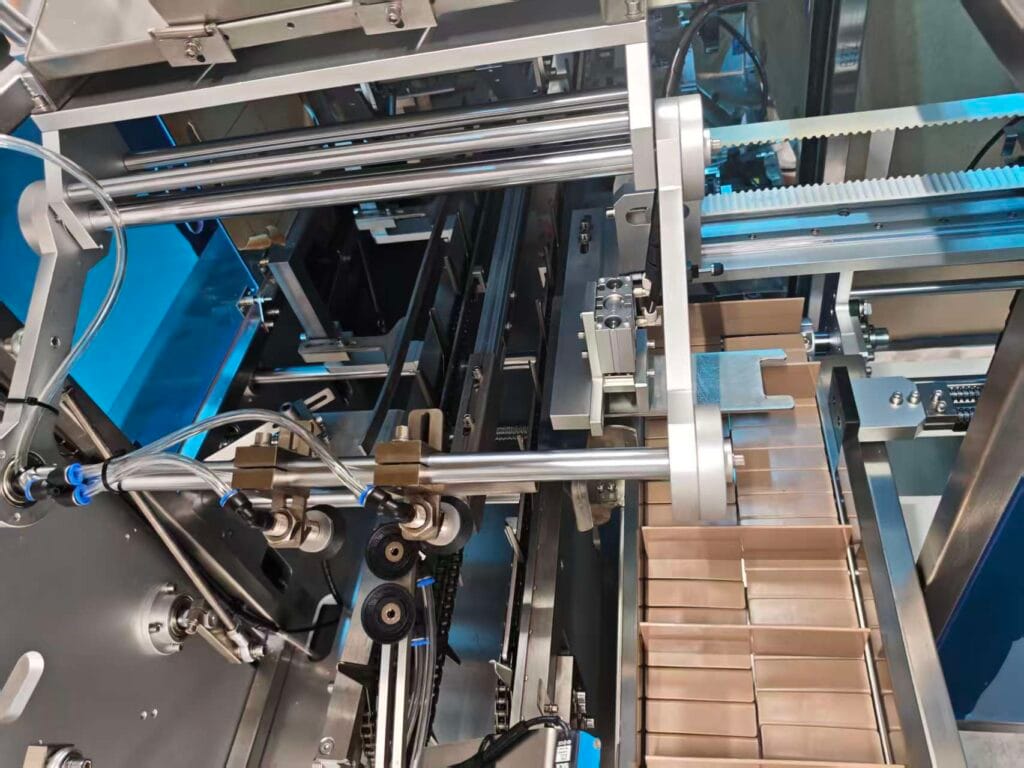
Example: In UBL T-type bagging and carton systems, modular feeders, pushers, and sealing units can be swapped in minutes to accommodate different bag sizes or box dimensions, reducing downtime during production changeovers.
2. Maintenance, Spare Parts & Availability
Modular Advantage:
- Standardized modules simplify spare part inventory management.
- Faulty modules can be isolated and replaced without stopping the whole line.
- Increases overall machine availability (OEE).
Fixed Structure Limitation:
- Components are usually custom-designed, leading to long lead times.
- A single failure can force full-line shutdown, impacting throughput.【2】
3. Cost, Development Cycle & Efficiency
Modular Advantage:
- Parallel module development reduces design cycles.
- Standardized production cuts costs.
- Modules can be reused across different models or product lines.
Fixed Structure Limitation:
- Development is longer and costly.
- Relies heavily on bespoke components, increasing CAPEX.
Insight: While modular machines may have higher upfront costs, the long-term total cost of ownership (TCO) is lower due to reduced downtime, easier upgrades, and better adaptability.
4. Reliability & Stability
Fixed Structure Advantage:
- Superior for large-scale, heavy-load applications requiring extreme precision.
- Integrated design minimizes alignment errors.
Modular Limitation:
- More interfaces can mean greater assembly precision challenges.
- Poorly designed connections can affect stability.
Practical Tip: For UBL automated cartoners handling fragile snacks or high-end cosmetics, modular structures are engineered with high-tolerance interfaces and reinforced frames to match the stability of fixed systems while maintaining flexibility.
5. Customization & Personalization
Modular Advantage:
- Easily configurable to client-specific workflows or packaging requirements.
- One platform can produce multiple product types by swapping modules.
Fixed Structure Limitation:
- Customization usually requires a complete redesign.
- Costs and downtime increase with each new product introduction.
6. Real-World Applications
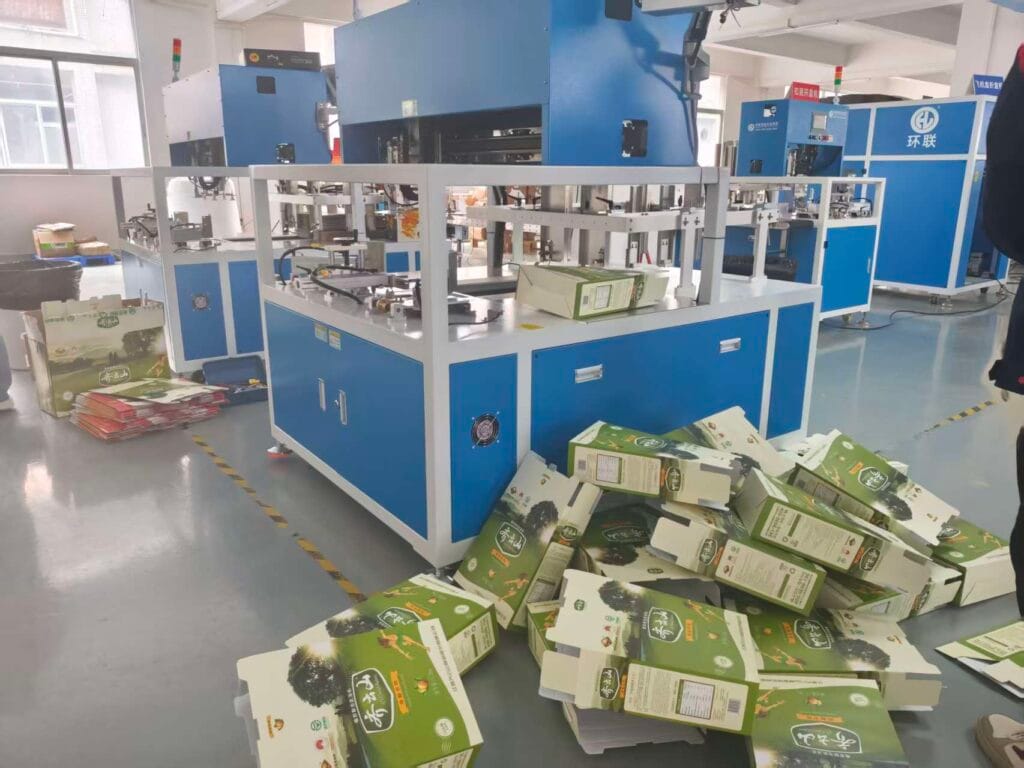
- Modular: CNC machines, automated pouch loaders, pick-and-place robots, flexible carton lines.
- Fixed: Heavy-duty presses, high-volume carton formers, continuous high-precision filler lines.【3】
7. Challenges of Modular Structures
- Design Complexity: Predicting multiple use cases increases design workload.
- Interface Standardization: Poorly defined interfaces lead to compatibility issues.
- Multi-Module Coordination: PLC and control systems must synchronize modules precisely to avoid bottlenecks.【4】
8.Strategic Insight:
For e-commerce and intelligent packaging lines, modular design delivers unmatched flexibility, while fixed structures remain relevant for precision-heavy, low-variation manufacturing.
| Factor | Modular Machine Structure | Fixed Machine Structure | Notes / Implications |
|---|---|---|---|
| Market Dynamics | Highly adaptable to fast-changing markets | Less adaptable; changes require major redesign | Modular is ideal for e-commerce or multi-SKU lines |
| SKU Variety | Easily handles multiple SKUs with quick changeovers | Limited flexibility; new SKUs may need structural modification | Modular reduces downtime during product switchovers |
| Maintenance & Spare Parts | Modules can be replaced independently; spare parts standardized | Component failures may require full-line downtime; parts often custom | Modular improves uptime and reduces inventory cost |
| Stability & Precision | Slightly lower rigidity; interfaces require careful alignment | Extremely stable and precise; fewer mechanical deviations | Fixed structure excels in heavy-load or high-precision scenarios |
| Cost Considerations | Higher initial investment, long-term ROI favorable | Lower initial customization cost, but upgrades expensive | Modular pays off for long-term growth and flexibility |
| Customization | Supports client-specific modules and functional expansions | Customization usually requires redesign of entire system | Modular allows quick adaptation for new products or markets |
9. Conclusion: Structure Choice is a Business Decision
Choosing between modular and fixed machine structures is more than a technical question—it’s strategic.
- Modular machines provide adaptability, faster changeovers, simplified maintenance, and future-proofing.
- Fixed machines offer extreme stability, precision, and reliability for high-load, repetitive production.
For UBL, modular designs are the foundation of our flexible packaging lines, allowing customers to handle diverse SKUs, protect fragile products, and scale efficiently—without sacrificing stability or uptime.