Why Do Clothing Factories Lose Profit in the Final Step? A Strategic Guide to Apparel Folding Machine Automation
In many modern garment factories, production has become faster and more efficient thanks to automation in cutting and sewing. However, there is one stage of the workflow that still relies heavily on manual labor: garment folding and packaging.
This final step may seem simple, but it often becomes a hidden profit leak for clothing manufacturers. When folding is done manually, factories face inconsistent quality, rising labor costs, and slower production speeds.
That’s why more manufacturers are turning to an Apparel Folding Machine as part of their automation strategy. By upgrading the finishing process, companies can dramatically improve productivity while protecting product presentation and brand image.
In this article, we’ll explore why manual folding has become a major production bottleneck—and how automated folding technology can transform the economics of garment manufacturing.
The Hidden Bottleneck in Garment Production
Efficiency Imbalance in Modern Apparel Factories
Over the past decade, sewing lines have become significantly more efficient due to automation and digital production management.
According to industry research from McKinsey’s State of Fashion manufacturing reports, sewing productivity in many factories has improved by nearly 30% over the past decade.
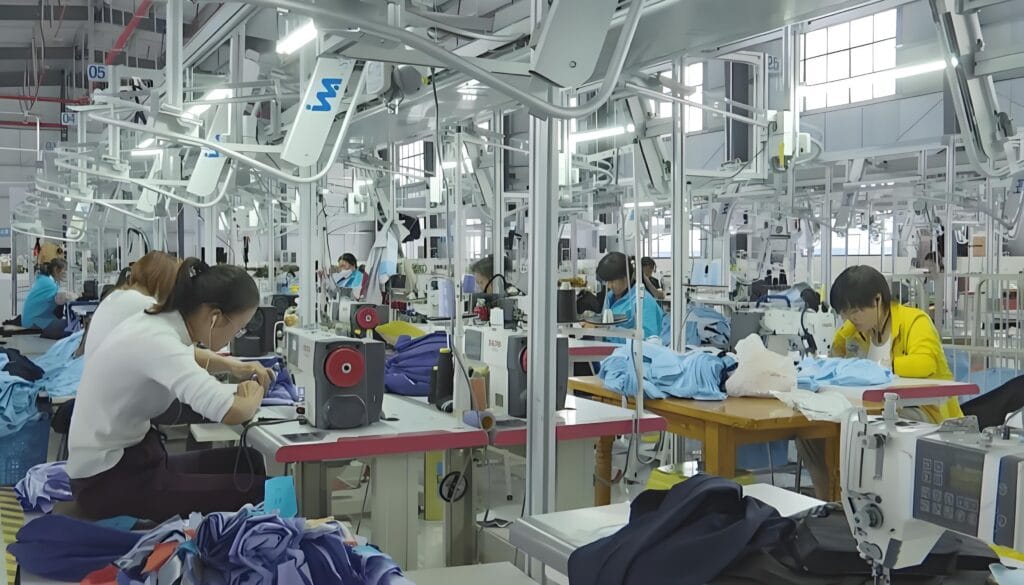
However, finishing operations—including folding and bagging—have seen far less improvement because they still rely on manual labor.
In many factories across Southeast Asia and China, manual folding productivity typically remains around 2–4 garments per minute per worker, depending on garment complexity.
This imbalance creates a serious production bottleneck, especially when factories try to scale output during peak seasons.
Consistency Problems and Brand Impact
Speed isn’t the only issue.
Manual folding often produces inconsistent results, which can negatively impact the customer experience.
According to retail logistics studies from Statista, poor packaging presentation contributes to a significant portion of customer dissatisfaction in apparel e-commerce.
For B2B buyers and retail brands, inconsistent folding may signal poor factory management—even if the garment quality itself is excellent.
A neatly folded product placed perfectly in a poly bag creates a strong first impression. An uneven fold, however, can reduce perceived value before the customer even tries the product.
How Manual Folding Quietly Eats Away at Factory Profit
Manual folding affects more than just productivity. It also creates several hidden operational costs.
Rising Labor Costs
Labor expenses in garment manufacturing continue to increase globally.
According to the International Labour Organization (ILO), manufacturing wages in many Asian production hubs have steadily risen over the past decade.
But wages are only part of the equation.
Manual folding also introduces:
- recruitment and training costs
- high worker turnover rates
- additional production supervision
In many garment factories, turnover in finishing departments exceeds 25% annually, which means constant hiring and training.
Space and Facility Costs
Manual folding stations require large worktables and buffer zones where finished garments accumulate before packaging.
This takes up valuable factory floor space.
Automated equipment, on the other hand, can significantly reduce space requirements. A modern Apparel Folding Machine typically occupies only 3–5 square meters while replacing the output of several workers.
Better space utilization also improves workflow efficiency across the entire production line.
Manual Folding vs Apparel Folding Machine
The difference between manual folding and automated folding becomes very clear when comparing key operational factors.
| Factor | Manual Folding | Apparel Folding Machine |
|---|---|---|
| Production Speed | 2–4 garments per minute per worker | Up to 20–30 garments per minute |
| Consistency | Highly dependent on worker skill | Uniform folding every cycle |
| Labor Requirement | Multiple workers required | One operator can supervise the machine |
| Operating Hours | Limited by worker fatigue | Continuous 24/7 operation |
| Floor Space | Requires large workstations | Compact equipment footprint |
| Product Presentation | Inconsistent folding quality | Precise and repeatable folds |
For factories managing large orders or multiple SKUs, the efficiency gains from automation can be substantial.
The Business Advantages of Apparel Folding Machine Automation
Faster Response to Market Demand
Fashion supply chains are becoming faster and more unpredictable.
Retail brands frequently release new styles, seasonal promotions, and limited product runs. Automated folding systems allow factories to adjust production quickly without adding additional labor.
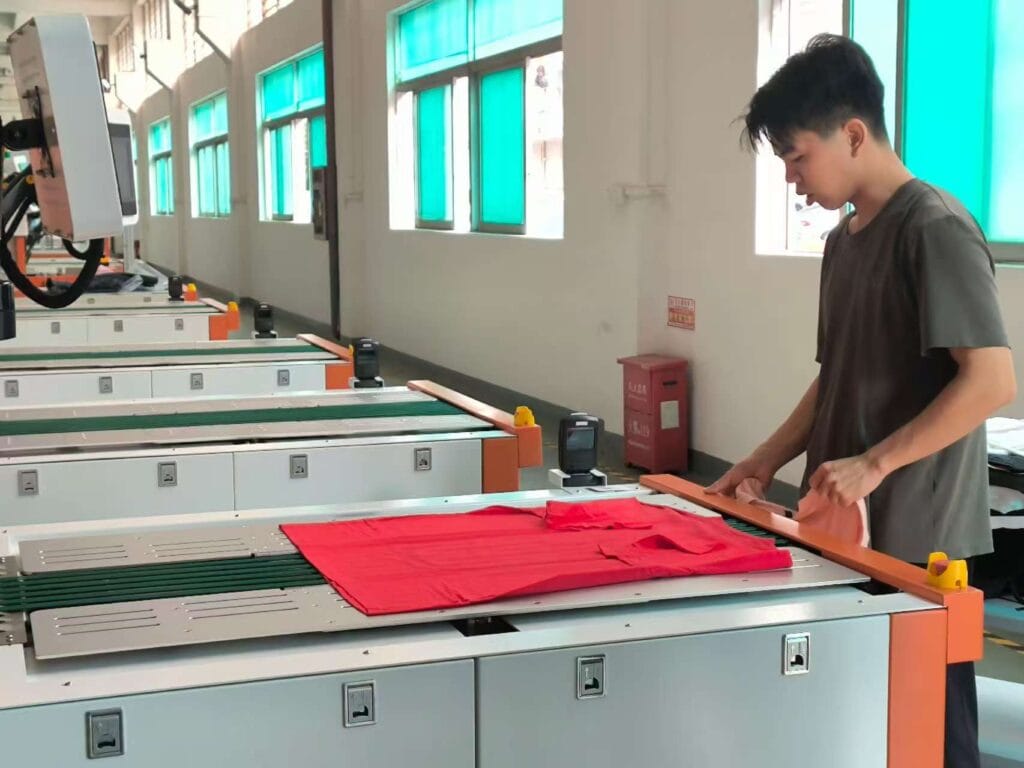
An Apparel Folding Machine can switch folding templates within seconds, making it easier to handle different garment sizes or packaging requirements.
Improved Product Presentation
Consistent folding improves packaging aesthetics and brand perception.
For example, automated folding ensures that the printed graphic on a T-shirt always sits perfectly centered in the packaging bag.
This level of consistency can significantly enhance retail shelf presentation and online product imagery.
Stable 24/7 Production
Unlike human workers, machines do not suffer from fatigue.
Production speed remains stable throughout the day, eliminating the common drop in efficiency that occurs during long manual shifts.
For factories handling large export orders, this stability can dramatically improve delivery timelines.
Real-World Example: Automation in Practice
A large export garment manufacturer recently introduced an automated Apparel Folding Machine into its finishing line.
After six months of operation, the factory reported several improvements:
- folding accuracy increased from 88% to 99.8%
- finishing department floor space reduced by 40%
- packaging labor costs dropped by $0.12 per garment
With an annual production volume of 5 million garments, the automation upgrade increased net profit by roughly $600,000 per year.
This example highlights how finishing automation can directly impact profitability.
How to Start the Automation Transition
Factories considering automation should approach the transition strategically.
Step 1: Evaluate Your Current Production Bottlenecks
Start by analyzing production flow and identifying where delays occur.
If your sewing lines regularly outpace finishing operations, folding automation may offer the fastest ROI.
Step 2: Start with High-Volume Products
Instead of replacing the entire finishing department immediately, begin with one core product line—such as high-volume T-shirts.
Once ROI becomes clear, the automation model can be expanded across additional product categories.

Conclusion
In modern apparel manufacturing, profitability is no longer determined solely by sewing efficiency.
The final stage of production—folding and packaging—can have a significant impact on productivity, labor costs, and product presentation.
An Apparel Folding Machine transforms this traditionally manual process into a high-efficiency automated operation. By improving consistency, reducing labor dependency, and increasing production speed, automated folding solutions help factories stay competitive in a rapidly changing global market.
For manufacturers facing rising labor costs and growing production demands, investing in folding automation may be one of the most strategic upgrades they can make.
FAQ
What is an apparel folding machine?
An apparel folding machine is an automated device designed to fold garments such as T-shirts, polo shirts, and sweaters into consistent shapes for packaging and retail presentation.
How many workers can one folding machine replace?
Depending on production speed, one apparel folding machine can typically replace the output of 4–6 manual folding workers.
What is the ROI of garment folding automation?
Most factories recover their investment in 12–18 months through labor cost savings and increased productivity.
Trending now