Servo-Driven Cartoning Machine: Why Precision Matters in 2026
The evolution from mechanical to servo-driven cartoning technology represents one of the most significant advances in packaging automation. Servo-driven cartoning machines offer precision, flexibility, and efficiency that traditional cam-driven systems cannot match, making them increasingly essential for manufacturers competing in quality-sensitive markets.
What Is a Servo-Driven Cartoning Machine?
Servo-driven cartoning machines use computerized servo motors instead of mechanical cams and gears to control motion profiles. This digital control enables:
- Programmable motion curves: Optimized for each product
- Real-time adjustments: Automatic compensation for variations
- Synchronized multi-axis control: Perfect coordination of complex movements
- Data feedback: Continuous performance monitoring
According to packaging machinery automation trends, servo technology adoption is accelerating across all packaging equipment categories, driven by Industry 4.0 initiatives and quality demands.
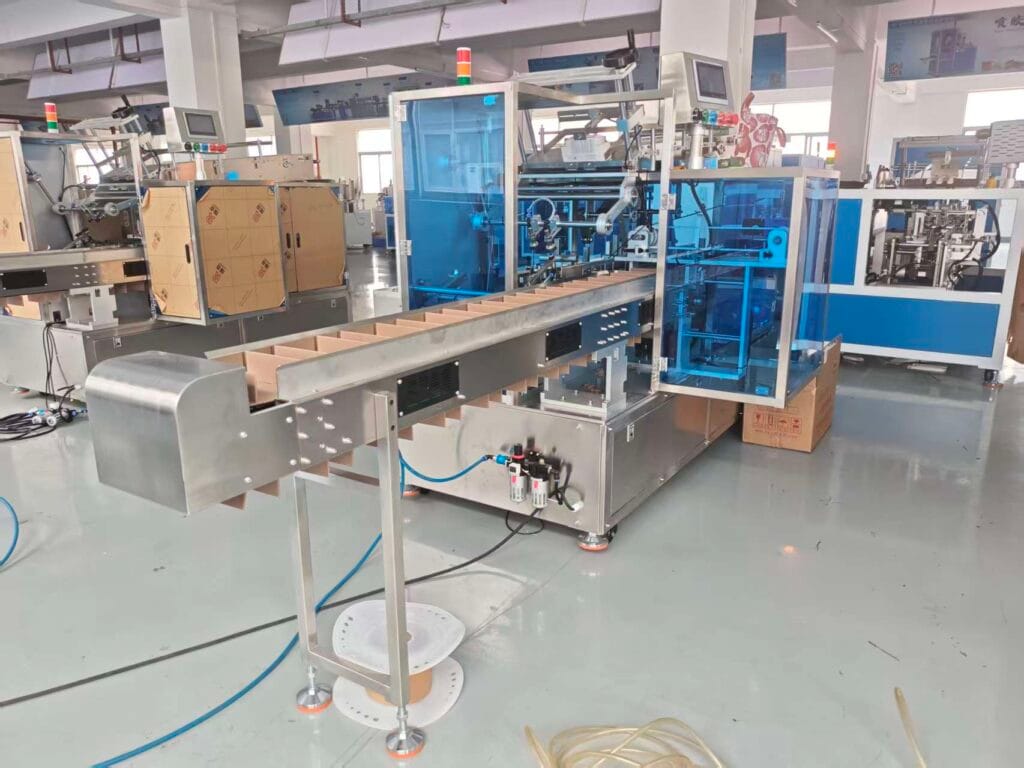
Servo vs. Mechanical: Key Differences
Precision and Repeatability
| Metric | Mechanical System | Servo System | Improvement |
|---|---|---|---|
| Positioning accuracy | ±1-2mm | ±0.1-0.3mm | 5-10x better |
| Repeatability | 95-98% | 99.5-99.9% | Significant gain |
| Changeover time | 30-60 minutes | 5-15 minutes | 70-80% faster |
| Setup complexity | Mechanical adjustments | Digital parameters | Much simpler |
Flexibility and Changeovers
Mechanical Systems:
- Fixed motion profiles determined by physical cams
- Mechanical change parts for different products
- Lengthy changeover procedures
- Limited ability to optimize for specific products
Servo Systems:
- Software-defined motion profiles
- Recipe-based product changeovers
- Automatic parameter adjustment
- Continuous optimization capability
Applications Where Servo Technology Excels
1. Pharmaceutical Packaging
Requirements:
- Insertion accuracy for leaflets and devices
- Gentle handling of fragile products
- Precise glue application
- Validation and traceability
Servo advantages:
- 99.9%+ insertion accuracy
- Programmable gentle handling curves
- Consistent, repeatable performance
- Complete electronic documentation
2. Cosmetic and Personal Care
Requirements:
- Premium presentation consistency
- Handling of irregular shapes
- Multiple product configurations
- Quick SKU changeovers
Servo advantages:
- Smooth, controlled movements prevent product damage
- Recipe storage for instant changeovers
- Adaptive handling for product variations
3. Food Packaging
Requirements:
- High-speed operation (100-300+ cartons/minute)
- Gentle handling of fragile products
- Hygienic design
- Quick cleaning and changeovers
Servo advantages:
- Optimized speed curves maximize throughput
- Reduced product breakage
- Washdown-compatible servo motors
- Fast format changes minimize downtime
4. Electronics and High-Value Products
Requirements:
- Delicate handling of sensitive components
- Precise positioning for accessories
- Anti-static protection
- Traceability and serialization
Servo advantages:
- Ultra-smooth motion profiles
- Precise positioning accuracy
- Integration with vision systems
- Electronic batch records
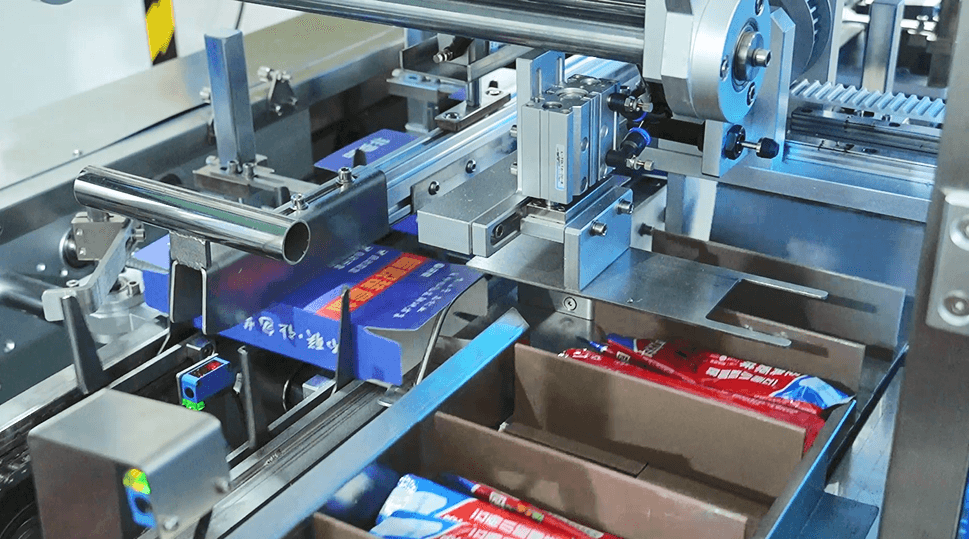
Technical Specifications and Capabilities
Speed and Throughput
Modern servo cartoning machines achieve:
- Intermittent motion: 30-120 cartons per minute
- Continuous motion: 120-400+ cartons per minute
- Acceleration profiles: Optimized for product fragility
- Synchronization: Multi-axis coordination within milliseconds
Precision Metrics
- Positioning accuracy: ±0.1mm to ±0.3mm
- Repeatability: ±0.05mm
- Velocity control: 0.1% accuracy
- Torque control: Precise force application
Control System Features
- HMI interface: Touchscreen recipe management
- Network connectivity: Ethernet/IP, Profinet, OPC-UA
- Data logging: Production statistics and traceability
- Remote access: Diagnostics and support capability
Investment and ROI Analysis
Equipment Cost Comparison
| System Type | Price Range (USD) | Precision | Flexibility |
|---|---|---|---|
| Mechanical cartoner | 30,000−70,000 | Standard | Limited |
| Entry servo cartoner | 50,000−90,000 | High | Good |
| Advanced servo cartoner | 90,000−180,000 | Very high | Excellent |
| Premium servo cartoner | 180,000−350,000 | Ultra-high | Maximum |
ROI Calculation Factors
Product Quality Improvements:
- Reduced damage rates: 2-5% → 0.2-0.5%
- Fewer customer complaints: 50-80% reduction
- Reduced returns and rework: 20,000−100,000+ annually
Efficiency Gains:
- Faster changeovers: Save 2-4 hours per change
- Reduced setup scrap: 90% reduction
- Higher OEE (Overall Equipment Effectiveness): 10-20% improvement
Labor Savings:
- Simplified setup: 70% less adjustment time
- Reduced skilled operator requirements
- Faster troubleshooting and recovery
Typical Payback Period: 18-36 months for mid-range servo systems, depending on product value and changeover frequency.
Integration with Smart Manufacturing
Servo-driven cartoners serve as key components in Industry 4.0 implementations:
Data Connectivity
- Real-time production data: Speed, efficiency, quality metrics
- Predictive maintenance: Motor health monitoring
- Quality traceability: Electronic batch records
- Remote diagnostics: Reduced service response times
MES and ERP Integration
- Production scheduling: Automatic recipe downloading
- Quality management: SPC data integration
- Maintenance systems: Automated work order generation
- Inventory management: Consumables tracking
Maintenance Considerations
Servo System Maintenance
Advantages:
- Fewer mechanical wear parts
- Condition monitoring capabilities
- Predictive maintenance alerts
- Longer service intervals
Requirements:
- Electrical expertise for troubleshooting
- Software updates and backups
- Encoder and feedback device care
- Cooling system maintenance
Maintenance Cost Comparison
- Mechanical systems: 5-8% of equipment cost annually
- Servo systems: 3-5% of equipment cost annually
Despite higher initial investment, servo systems often have lower total cost of ownership due to reduced maintenance and higher efficiency.
Future of Servo Technology in Packaging
Emerging Capabilities
- AI optimization: Self-tuning motion profiles
- Digital twins: Virtual commissioning and optimization
- Advanced robotics: Collaborative robot integration
- Edge computing: Real-time analytics and control
Market Trends
The packaging automation market is experiencing rapid growth in servo technology adoption, with manufacturers reporting 15-25% efficiency improvements compared to mechanical systems.
Selection Guidelines
When to Choose Servo Technology
High-Value Products: Product damage costs exceed servo premium
Frequent Changeovers: Multiple SKUs requiring fast format changes
Quality-Critical Applications: Pharmaceutical, cosmetics, electronics
Growth Trajectory: Anticipated production increases requiring flexibility
Industry 4.0 Strategy: Smart manufacturing and data integration requirements
When Mechanical Systems Suffice
Low-Value Commodities: Product damage costs minimal
Single Product Lines: Long production runs, rare changeovers
Budget Constraints: Limited capital availability
Simple Applications: Standard carton styles, robust products
Conclusion
Servo-driven cartoning machines represent the future of precision packaging automation. While requiring higher initial investment, they deliver measurable returns through improved quality, reduced waste, faster changeovers, and lower total cost of ownership. For manufacturers in quality-sensitive industries or those pursuing smart manufacturing initiatives, servo technology is becoming essential rather than optional.
Ready to explore servo-driven cartoning solutions? Contact our automation specialists for a technical consultation and customized equipment recommendation.
FAQ
Q: What’s the main advantage of servo-driven cartoners?
A: Precision and flexibility. Servo systems offer 5-10x better positioning accuracy and enable quick, software-based changeovers vs. mechanical adjustments.
Q: Are servo cartoners more reliable than mechanical systems?
A: Both can be highly reliable, but servo systems have fewer mechanical wear parts and offer predictive maintenance capabilities through condition monitoring.
Q: How much faster are servo changeovers?
A: Servo systems typically reduce changeover time by 70-80%, from 30-60 minutes to 5-15 minutes for complex format changes.
Q: Do servo cartoners require special maintenance skills?
A: Yes, maintenance teams need electrical and software troubleshooting capabilities in addition to mechanical skills.
Q: Can existing mechanical cartoners be upgraded to servo?
A: Some manufacturers offer retrofit kits, but comprehensive upgrades often approach the cost of new equipment. Evaluate total cost vs. benefits.